Reaching the Summit: CAS Unveils the Pinnacle Journal of Arts and Sciences
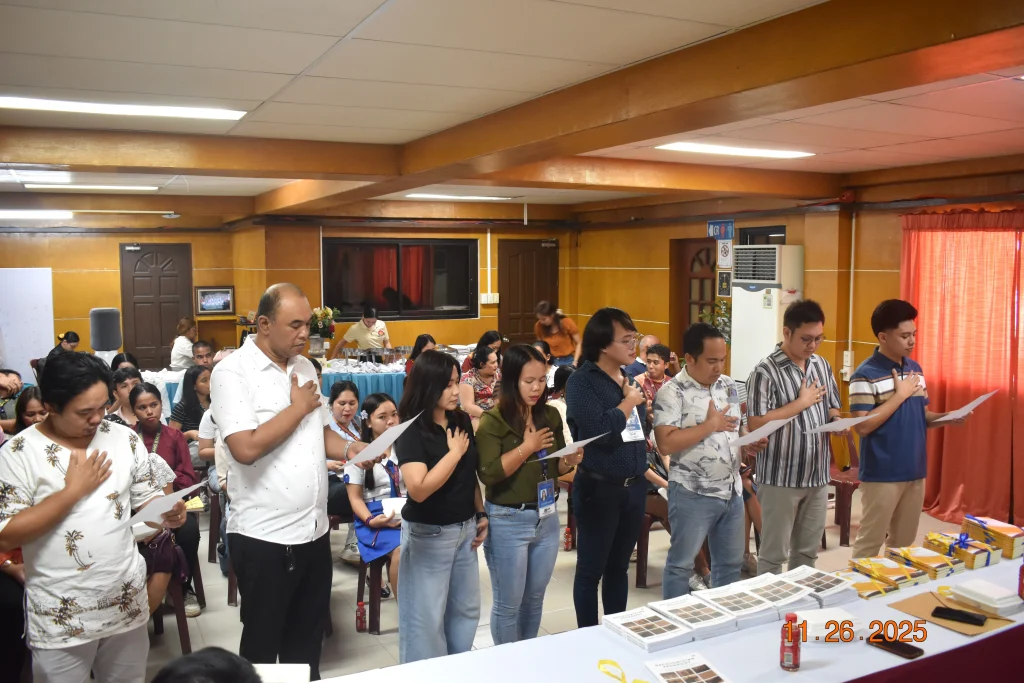
The Multimedia Center of the College of Arts and Sciences (CAS) transformed into a venue of celebration and intellectual pride as the college officially launched The Pinnacle: Journal of Arts and Sciences. Administrators, faculty, staff, and students gathered not simply to witness a program, but to honor the realization of a vision that had quietly taken shape through months of steady work and collective resolve. What unfolded was the narrative of a college determined to strengthen its scholarly voice and finally reaching one of its long-envisioned summits.
The event opened with an invocation led by Dr. Joseph Paña, the Issue Editor of The Pinnacle. This was followed by warm welcome remarks from Managing Editor Mr. CJ Hingpit, who acknowledged the presence of university leaders and described The Pinnacle as a platform committed to creativity, research, and intellectual expression. His introduction set the tone for a morning that celebrated both achievement and aspiration.
In his keynote message, Dean and Editor-in-Chief Dr. Bernabe M. Mijares Jr. offered a reflective account of how the journal came to life. He traced its beginnings to the college’s strategic plan, which paved the way for a workshop on journal publication facilitated by Dr. Reizl P. Jose. From this initiative, the editorial board was formed, and the title The Pinnacle: A Journal of Arts and Sciences, a suggestion from Dr. Ervin Noval, the Associate Editor of The Pinnacle, was formally adopted. Dr. Mijares spoke candidly about the challenges encountered along the way: managing time, gathering contributions, and sustaining momentum. Yet he expressed profound satisfaction that CAS had produced a scholarly publication grounded in substance and quality.
To underscore the importance of purpose in academic work, he shared a story about a dog and a rabbit. The dog eventually stopped chasing the rabbit, he recalled, while the rabbit continued to run because its life depended on it. The difference, he emphasized, lay in motivation. In the same way, the success of the journal hinged not on routine compliance but on a deeper sense of purpose driving the people behind it. Dr. Mijares concluded with a reflection invoking the figures of Christ and St. John the Baptist to illustrate the guiding and supporting roles within BISU and its administration in nurturing academic growth.
Following his message, Vice President for Research, Innovation and Extension Dr. Ivy Corazon Mangaya-ay administered the induction of the editorial board. The formal launching of the journal soon followed, culminating in the ceremonial handover of its first issue to the university library, a symbolic moment affirming its place within the institution’s academic holdings.
Dr. Mangaya-ay later delivered an inspirational message, acknowledging the leadership within CAS and commending the collective effort behind the publication. She reflected on recent Senate discussions highlighting the limited number of universities that maintain research centers and active journals, noting that CAS had made a meaningful contribution toward addressing this national gap. The term “pinnacle,” she observed, signifies a culmination, and she encouraged faculty members to continue documenting their research and scholarly work. CAS, she added, holds a strategic position in cultivating a vibrant academic culture, and the journal stands as a vital instrument in this direction.
The program also featured two oral presentations that embodied the spirit of inquiry at the heart of The Pinnacle. Mr. Mark Steven Pandan shared ideas from his book on decolonizing pedagogy, introducing Lantugi as a local form of discourse framed as an agonistic practice with moral, temporal, and infrastructural dimensions. He emphasized that decolonizing education requires structural and sustained effort, urging educators to nurture environments that support deeper forms of learning.
Engr. John Lester Baroro presented his class scheduling system developed using Google Spreadsheets and Google Apps. He highlighted features such as pre-filled data, embedded restrictions, real-time visibility, integrated utility sheets, and mechanisms that strengthen accountability for schedulers. During the open forum, Dr. Mangaya-ay suggested integrating prioritization for faculty with multiple responsibilities and recommended presenting the system to the board for possible institutional support.
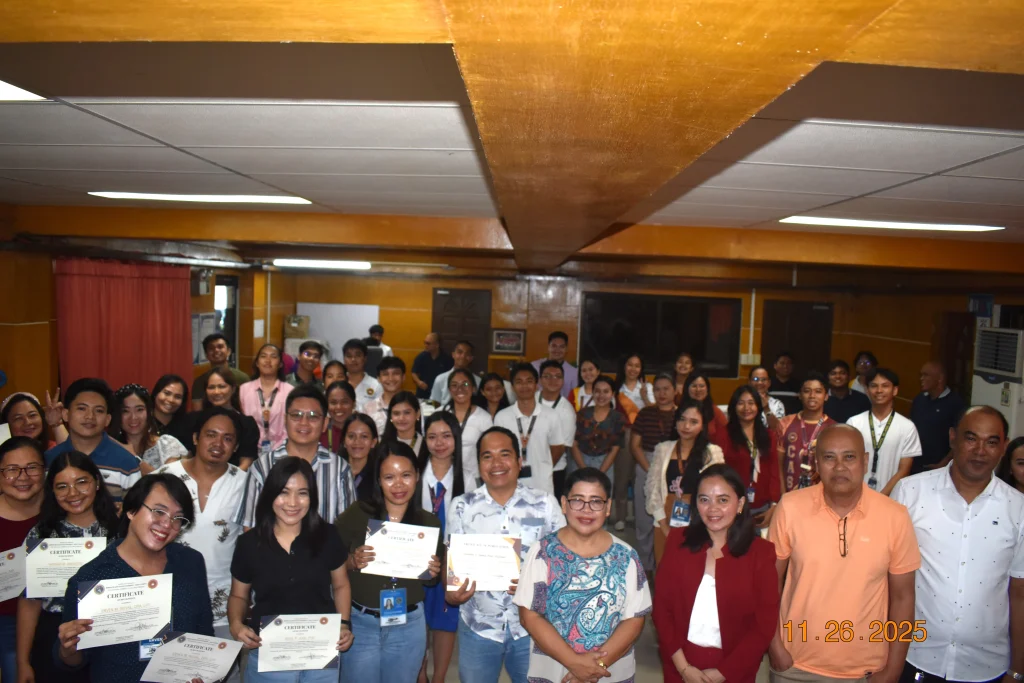
Contributors and presenters were later awarded certificates in recognition of their academic efforts. The audience was then shown an audio-visual presentation titled The Pinnacle: Conception, Inception, and the Present, narrated by Ma’am Butawan and Sir Pahayac. The AVP traced the journal’s developmental milestones and showcased the collaborative energy that brought it to fruition.
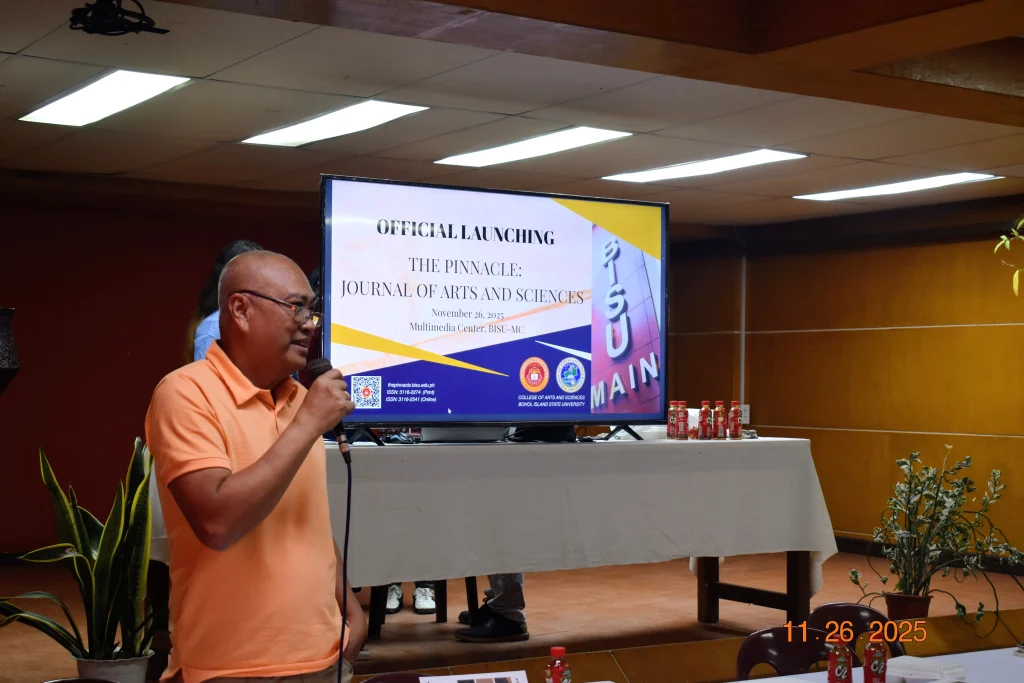
As the program neared its close, Dr. Gulayan expressed his joy at witnessing the journal’s launch alongside the recognition of ongoing scholarly work, including the book of Mr. Pandan. He commended the leadership of CAS under Dr. Mijares and reaffirmed his support for future editions of the journal. He reminded those present that the launch marked the beginning of a shared intellectual journey—an invitation to continue supporting and contributing to a publication that aspires to symbolize excellence.
The ceremony concluded with a photo opportunity that captured not just the attendees but the collective achievement they represented. The launching of The Pinnacle stands as a testament to the dedication, collaboration, and academic spirit of CAS, an accomplishment that signals not an ending but the beginning of a new chapter in the college’s ongoing pursuit of knowledge and scholarly distinction.